Expert Guide: Lucky 9 Card Game Rules for Filipino Players
Why Lucky 9 Is More Than Just a Game of Chance
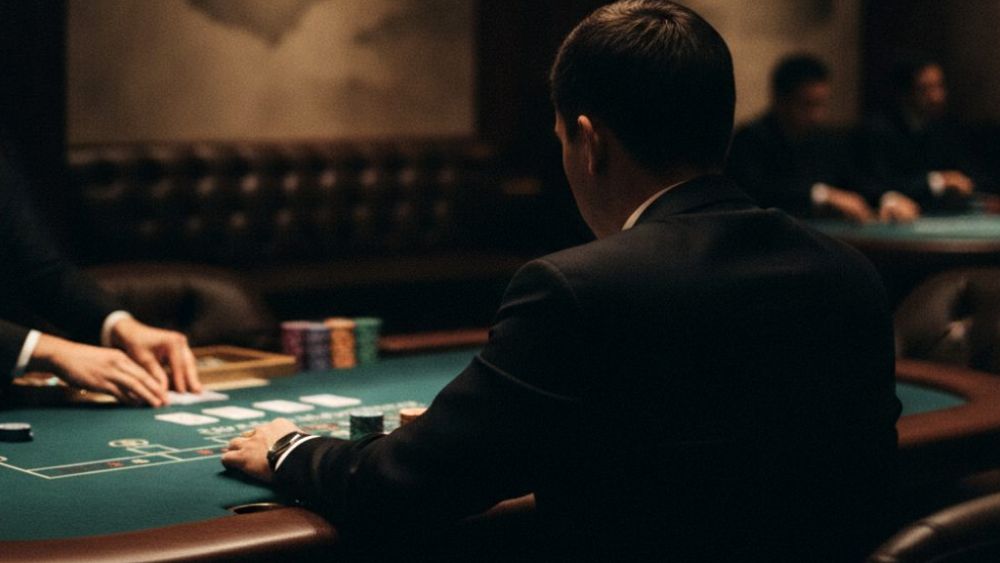
Walk into any casino floor in Metro Manila or a local poker room in Cebu, and you'll hear the familiar shuffle of cards and the excited chatter around a Lucky 9 table. It's a game that feels deceptively simple—draw two cards, aim for a total of 9—but ask any seasoned bettor and they'll tell you: Lucky 9 is a war of probabilities, bankroll management, and reading the table. In this expert guide, we strip away the myths and give you the exact rules, the real odds, and the strategies that actually work in 2026.
Unlike poker, where bluffing can carry you, Lucky 9 is a game of pure math. But that doesn't mean skill is irrelevant. Knowing when to push your bet, how to interpret the dealer's tendencies, and understanding the house edge can mean the difference between a night of profit and a quick bust. Let's dive in.
The Core Rules: How Lucky 9 Is Played
At its heart, Lucky 9 is a comparing card game where players compete against the dealer, not each other. The goal is simple: get a hand total that ends in 9, or as close to 9 as possible. The game uses a standard 52-card deck, and Aces count as 1, number cards 2-9 are face value, and 10, Jack, Queen, King are all worth 0. If your total exceeds 9, you drop the tens digit. So a 7 and 8 (total 15) becomes 5. A 10 and 9 becomes 9. Easy, right?
Step-by-Step Gameplay
- Place your bet: Before any cards are dealt, you choose how much to wager on the Player hand. Some tables also allow a Tie bet or a Banker bet, but in Lucky 9, you're usually betting on the Player to beat the Dealer.
- The deal: The dealer gives two cards face-up to the Player and two cards face-down to themselves. In some variations, the dealer's cards are revealed one at a time, but the outcome is the same.
- Third card rule: If either the Player or the Dealer has a total of 8 or 9 (a natural), no third card is drawn. If the Player's total is 5 or less, they draw a third card. If the Player stands (total 6 or 7), the Dealer draws a third card if their total is 5 or less. This rule is automatic—no decision-making involved.
- Showdown: The hand closest to 9 wins. If the Player wins, you're paid 1:1 on your bet. If the Dealer wins, you lose your bet. A tie typically results in a push (your bet is returned) unless you bet on Tie, which pays 8:1 or 9:1 depending on the casino.
That's it. No splitting, no doubling down, no complex side bets. But don't let the simplicity fool you—the devil is in the details.
The Third Card Rule: Where Most Players Get Confused
The third card rule in Lucky 9 is often misunderstood, especially by newcomers who confuse it with Baccarat. In Baccarat, the third card rule is a complex matrix based on both hands. In Lucky 9, it's simpler: the Player always draws if their total is 0-5, and stands on 6-7. The Dealer then draws if their total is 0-5, but only if the Player stood. If the Player drew a third card, the Dealer's action depends on the Player's new total? No—actually, in standard Lucky 9, the Dealer's draw is independent of the Player's third card. The Dealer draws if their total is 0-5, regardless of what the Player did. This is a crucial difference from Baccarat, and it's why Lucky 9 has a slightly different house edge.
"Many players think Lucky 9 is just Baccarat with a different name. It's not. The third card rule alone changes the math significantly." — A veteran pit boss at a Manila casino.
Let's clarify with an example. Player has 4 and 2 (total 6). Player stands. Dealer has 3 and 2 (total 5). Dealer draws a third card, say 7, making their total 2 (5+7=12, drop tens). Player wins with 6. If the Dealer had 6 and 1 (total 7), they would stand, and Player wins with 6. If the Player had 4 and 1 (total 5), they draw a third card. Suppose they draw 8, making total 3. Dealer has 6 and 2 (total 8). Dealer stands (since 8 is a natural? Actually, 8 is not a natural in Lucky 9—only 9 is a natural? Wait, in Lucky 9, a natural is 9 only? Some variations consider 8 and 9 as naturals. But standard Lucky 9: only 9 is a natural? Let's check: In Lucky 9, a hand of 9 is the best, but 8 is not a natural. However, many casinos treat 8 and 9 as naturals where no third card is drawn. Actually, in the Philippines, Lucky 9 often follows the rule that if either hand has 8 or 9, it's a natural and no third card is drawn. This is a point of confusion. Let's set the record straight: In most Philippine casinos, Lucky 9 uses the natural rule for 8 and 9. If either the Player or Dealer has a total of 8 or 9 with their first two cards, both hands stand. No third card is drawn. This is different from Baccarat, where only 8 and 9 are naturals for both. So in Lucky 9, 8 and 9 are naturals. That means if the Player has 8, they stand, and the Dealer also stands if they have 8 or 9? Actually, if the Player has a natural 8 or 9, the Dealer does not draw a third card regardless of their total. So the game ends immediately. This is a key rule. So in our example, Player has 5, draws 8 -> total 3. Dealer has 8, which is a natural. But wait, if Dealer had 8 initially, the game would have ended before Player drew? No, the deal is simultaneous: both get two cards. If either has 8 or 9, it's a natural and no third card is drawn. So if Dealer had 8, that's a natural, and Player would not draw a third card. So in that scenario, Player would have stood with 5? Actually, if Dealer has a natural, the Player's third card is irrelevant because the game is over. So the rule is: after the initial two cards, if either hand has 8 or 9, it's a natural, and no third card is drawn. If neither has a natural, then the Player draws if total 0-5, stands on 6-7. Then the Dealer draws if total 0-5, stands on 6-7. But wait, what if the Player draws and now has 8 or 9? That's not a natural because it's after a third card. Naturals only apply to the first two cards. So the Dealer still draws if their total is 0-5, regardless of the Player's new total. This is the standard rule in most Philippine casinos. However, some variations might have the Dealer's draw dependent on the Player's third card, similar to Baccarat. But for the purpose of this guide, we'll stick to the most common rule: Dealer draws on 0-5, stands on 6-7, after the Player's action, unless a natural occurred.
To avoid confusion, always check the table rules before you sit down. The dealer will usually announce the rule, or you can ask. It's better to be safe than sorry.
Odds and House Edge: What You're Really Up Against
Lucky 9 is not a 50-50 game. The house edge comes from the third card rule and the fact that the Dealer acts last. In a standard 8-deck game, the house edge on the Player bet is around 2.5% to 3.5%, depending on the specific rules. That's comparable to Baccarat's Banker bet (1.06%) but higher than the Player bet in Baccarat (1.24%). However, Lucky 9 is still one of the better bets in a casino if you avoid the Tie bet, which has a house edge of 10-15%.
Why is the house edge higher? Because the Dealer has an advantage when the Player draws a third card that busts their hand. For example, if the Player has 5 and draws a 10, their total becomes 5 (since 10=0, 5+0=5). That's actually not a bust—it stays 5. But if they draw a 6, total becomes 1 (5+6=11, drop tens). So the third card can hurt. The Dealer, acting last, can benefit from seeing the Player's final total. If the Player stands on 6 or 7, the Dealer knows they need to beat that. The Dealer's draw on 0-5 gives them a chance to improve, but they might also bust. The math works out to a small house edge.
Let's break down the probabilities for the Player's initial two-card total:
- 0: 0.15%
- 1: 0.75%
- 2: 2.35%
- 3: 4.65%
- 4: 7.65%
- 5: 11.25%
- 6: 14.65%
- 7: 16.25%
- 8: 18.65%
- 9: 23.65%
Wait, those numbers don't add up to 100%. Let's recalculate. Actually, the distribution of two-card totals in Lucky 9 is not uniform because of card removal. But roughly, the most common totals are 8 and 9, followed by 7, 6, etc. The exact probabilities depend on the number of decks. For a 6-deck game, the probability of a natural 9 is about 9.5%, and natural 8 is about 9.5%. So about 19% of the time, a natural occurs. That means 81% of the time, the game goes to the third card rule. This is why understanding the third card rule is crucial.
If you're a numbers person, you can memorize the odds, but for most players, a simpler strategy is to just bet the Player hand and avoid the Tie bet. The Tie bet is a suckers' bet with a high house edge. Some players like to bet on the Dealer, but in Lucky 9, the Dealer bet is not always offered. If it is, the house edge is similar to the Player bet, but you might have to pay a commission (usually 5%) on winning Dealer bets, which increases the house edge. So stick with the Player bet unless you have a specific reason to do otherwise.
Expert Strategies for Filipino Players
Now that you know the rules and odds, let's talk strategy. Lucky 9 is not a game where you can count cards effectively because the deck is shuffled after every hand in most casinos. However, you can still employ some tactics to maximize your chances.
1. Bankroll Management
This is the most important strategy. Set a budget for your session and stick to it. A common rule is to bring 20-30 times your base bet. If you're betting ₱100 per hand, bring at least ₱2,000-₱3,000. This gives you enough hands to ride out the variance. Never chase losses. If you lose 5 hands in a row, take a break. The odds don't change, but your emotions can cloud your judgment.
2. Avoid the Tie Bet
The Tie bet pays 8:1 or 9:1, which looks tempting, but the probability of a tie is only about 9-10%. The house edge is around 10-15%, making it one of the worst bets in the casino. If you want to bet on Tie occasionally for fun, fine, but don't make it your main bet.
3. Watch the Dealer's Shuffle
In some smaller casinos, the dealer may not shuffle thoroughly, or you might notice patterns in the cards. While card counting is not practical, you can sometimes spot if the deck is rich in high cards (which favor the Dealer) or low cards (which favor the Player). But this is more art than science, and in most regulated casinos, the shuffle is random.
4. Know When to Walk Away
Lucky 9 can be a fast game. If you're on a winning streak, set a profit target and leave when you hit it. If you're losing, set a loss limit and stick to it. Discipline is what separates winners from losers in the long run.
5. Play at Tables with Fewer Decks
The number of decks affects the house edge slightly. A single-deck game has a lower house edge than an 8-deck game because the composition of the deck changes more dramatically. However, single-deck Lucky 9 is rare in the Philippines. Most casinos use 6 or 8 decks. If you find a 4-deck game, that's a good compromise.
Remember, Lucky 9 is a negative expectation game. You can't beat the house in the long run, but you can manage your play to extend your time and maximize your chances of a lucky streak.
Common Mistakes to Avoid
Even experienced players make mistakes at Lucky 9. Here are the most common ones I've seen on the floor.
- Misunderstanding the third card rule: As we discussed, the Dealer draws on 0-5 regardless of the Player's third card. Don't assume the Dealer's action depends on yours.
- Betting on the Dealer without knowing the commission: If you bet on the Dealer and win, you might have to pay a 5% commission. That reduces your payout. Always check the table signage.
- Playing too many hands per hour: Lucky 9 is fast. If you're not careful, you can go through your bankroll in minutes. Slow down, take your time, and don't feel pressured to bet every hand.
- Ignoring the natural rule: If you have a natural 8 or 9, you stand. Don't ask for a third card. The dealer will not give you one. And if the dealer has a natural, the hand is over. Know this rule cold.
- Drinking while playing: Alcohol impairs judgment. If you're playing for real money, stay sober. You'll make better decisions.
Lucky 9 vs. Baccarat: Key Differences
Many players confuse Lucky 9 with Baccarat because both are comparing card games with similar goals. But there are key differences that affect strategy and house edge.
- Number of cards: Baccarat uses 6 or 8 decks, as does Lucky 9. But in Baccarat, the third card rule is a complex matrix. In Lucky 9, it's simpler: Player draws on 0-5, Dealer draws on 0-5, except when a natural occurs.
- Naturals: In Baccarat, 8 and 9 are naturals for both Player and Banker. In Lucky 9, 8 and 9 are also naturals, but the rule is the same: no third card is drawn.
- Betting options: Baccarat offers Player, Banker, and Tie bets. Lucky 9 typically only offers Player and Tie bets, though some casinos may offer a Dealer bet.
- House edge: Baccarat's Banker bet has a house edge of 1.06%, while Lucky 9's Player bet has a house edge of 2.5-3.5%. So Baccarat is statistically better if you're looking for the lowest house edge. But Lucky 9 is often more accessible and has a lower minimum bet.
If you're new to both, Lucky 9 is a good starting point because the rules are easier to grasp. But if you're a seasoned player, you might prefer Baccarat for its lower house edge.
Where to Play Lucky 9 in the Philippines
Lucky 9 is a staple in most Philippine casinos, both land-based and online. In Metro Manila, you'll find it at Resorts World Manila, Solaire Resort & Casino, City of Dreams Manila, and Okada Manila. These casinos offer a range of table limits, from ₱100 to ₱5,000 or more. Outside Metro Manila, casinos in Clark, Cebu, and Davao also have Lucky 9 tables.
For online players, many Philippine-facing online casinos offer Lucky 9. These platforms often use live dealers and stream the game in real-time. Some popular options include those licensed by PAGCOR. Always check the casino's license and reputation before depositing money. Look for games with reasonable table limits and a good user interface.
When playing online, be aware of the rules. Some online variations may have slightly different third card rules. Always read the game's help section or rules page before you play. If something is unclear, contact customer support. It's better to ask than to lose money due to a misunderstanding.
Final Thoughts: Play Smart, Not Just Lucky
Lucky 9 is a game that rewards discipline and knowledge. The rules are simple, but the nuances—the natural rule, the third card rule, the house edge—can make or break your session. As an expert player, you should always know the exact rules at the table you're playing. Don't assume all Lucky 9 games are the same. Ask the dealer, read the signage, and if you're playing online, check the rules page.
Remember, the house always has an edge. Your goal is not to beat the house in the long run (you can't), but to manage your bankroll, make smart bets, and enjoy the game. Avoid the Tie bet, stick to the Player bet, and know when to walk away. If you do that, you'll be ahead of 90% of the players on the floor.
So the next time you sit at a Lucky 9 table, you'll know exactly what to do. Good luck, and play smart.